
Skimming & Scanning – The Foundation skills of Reading
What are they?
Skimming and scanning are the reading techniques in which rapid eye movement and keywords are used to move quickly through the text. Skimming is reading rapidly in order to get a general overview of the text. Scanning is reading rapidly in order to find specific facts and answers. While skimming tells you what a section is about, scanning helps you to locate a particular fact.
Key concepts
(to understand before practicing these strategies for each type of question)
KEYWORDS
Important to the meaning of the text
‘key’ to correct answer in Exam
Main words in the text that imply the meaning of the text, thus making it easier for you to compare the meanings of the two texts.
Complete sentences/ full phrases do not work well as keywords since they are too long to deduce the answer by matching them with the text in the passage
TOPIC SENTENCES (TS)
Identifies main idea of the paragraph (the single controlling idea)
Tells the reader what paragraph is about
Mostly at the beginning of the paragraph
CONTEXT
Context refers to the global understanding of the passage
Knowledge that constitute the background of an idea, sentence or an event.
It enables the readers to understand what the piece of text is about/the meaning of the text
Skimming is the technique that helps in understanding the context of a passage
PARAPHRASE (PP)
Express the meaning of the same statement in different words
Paraphrased sentences can be identified through synonyms, changed form of words
Helps to find the connected sentences/phrases/keywords for reaching to the correct answer
Scanning
After you skim the passage and you have the idea of what the passage is about, scanning is the next step. But we scan for specific information. Scanning helps in finding the answers for specific questions in exam.
It involves searching the text quickly for a specific piece of information.
Looking for specific information, like, a name, number or a date
Quick tip
If you know the type of word you have to find, you don’t need to read every word in the article.
INTENSIVE READING
Understand the details of a text
The main purpose of the reading section is to assess exam takers in the following areas:
Reading for details and understanding the details in a text
Recognizing inferences and understanding implied meaning
Recognizing a writer’s opinions, and purpose of the writing
Step 1: Skim the passage
Run your eyes quickly through the article—get a gist of what the article is about—notice the headings/sub-headings, diagrams etc
Step 2: Read the first sentence of each paragraph to determine its theme +Make notes around the article
Read with specific purpose
Step 3: Read the questions and be clear what you are looking for
Skim+scan done
Step 4: Mark the keywords in question +think about synonyms of those keywords
Don’t expect to find the same words in the article
Step 5: Locate the right paragraph using your skimming and scanning skills
Step 6: Read that paragraph in detail (Intensive Reading) to find out the answer
Practice Passage 1
The world’s coral reefs do more for the planet than provide underwater beauty.
They buffer shorelines from the effects of hurricanes. An estimated 500 million people earn their livelihoods from the fishing stocks and tourism opportunities reefs provide. The tiny animals that give rise to reefs are even offering hope for new drugs to treat cancer and other diseases.
Despite their importance, warming waters, pollution, ocean acidification, overfishing, and physical destruction are killing coral reefs around the world. Schemes to save those reefs are as creative as they are varied; most recently, scientists released data showing that marine protected areas can help save reefs if they are placed in just the right spots. Genetics is also becoming a larger area of coral research, giving scientists hope they might one day restore reefs with more heat tolerant coral.
Scientists often compare coral reefs to underwater rainforests, yet unlike the leafy plant base of a forest, corals are animals. The soft polyps inside the hard parts of corals are naturally translucent and get their famously vibrant color from algae living inside them.
When corals experience stress from hot temperatures or pollution, they end their symbiotic relationship with this algae, typically expelling them and turning white, though one recent study indicates some coral turn a bright neon color when stressed. Coral are still alive when they bleach, but they’re at risk—essentially immunocompromised—and many eventually starve and die, turning a dark brown.
Keywords in Bold- explain the context of the passage
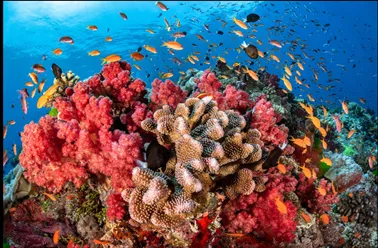
Images and text from www.nationalgeographic.com
SKIMMING FOR THE GIST
Move rapidly over the passage in 40 seconds (set a timer)
Note the words/phrases that tell what the passage is about. (content words like Nouns & Verbs)
Now, without looking at the passage, try to remember where did you read the following information- Beginning, Middle or end of the passage
A) Economic benefits of coral reefs
B) Solution to the problem coral reefs are facing
C)Processes that are harming coral reefs
D)How they change colour
4.Can you infer what is the context of the passage/what is it about?
Hence, Skimming
Tells you what the passage is about (Context of the passage)
Gives general idea on how information is organized
Basically, when you start moving over the passage rapidly, you will notice that the first line gives you the gist/context of this text. This is the practice where we capture important words that explain us the overview of the text briefly.
Practice reducing the time you need to find the words/phrases.
Quick tip
Remember the details you read at some point in the passage. For example, if you remember that you read something about the color of the coral while skimming at the end of the passage, you will quickly descend and find the correct information there.
Practice scanning the above passage for the words/phrases in the box:
500 million people Genetics immunocompromised neon underwater rainforests
Answer the following questions :
1.Corals derive their colour from ………..
2.Scientists are trying to modify the genes of the corals to produce ……………….. variety of corals.
3.Coral turns white when they end their ……………………….. with algae
As soon as you read the above questions, you should mark the keywords.
Your question paper will look like:- (words in bold should be the ones marked by you as keywords)
Corals derive their colour from ………..
Scientists are trying to modify the genes of the corals to produce ……………….. variety of corals.
Coral turns white when they end their ……………………….. with algae.
Remember where you read about that information
2. Look for the words/their synonyms/other forms of the same word (like ‘gene’ and ‘genetics’)
3. Match the information and find the correct answer!
Hence, both skimming and scanning help you to reach to the right answer for the questions asked
Guessing the meaning of unknown words
In the last paragraph, there may be a few words that are new for us, Can you try to guess their meaning?
When corals experience stress from hot temperatures or pollution, they end their symbiotic relationship with this algae, typically expelling them and turning white, though one recent study indicates some coral turn a bright neon color when stressed. Coral are still alive when they bleach, but they’re at risk—essentially immunocompromised—and many eventually starve and die, turning a dark brown.
immunocompromised– It might mean some ‘compromise’ with immune system
starve– It might depict something negative due to which their death happens/ may be ‘hunger’
So, just try to guess the meaning, with the help of the surrounding sentences and the context of the article.
OVERALL STEP BY STEP PROCESS FOR ANSWERNG IELTS/CELPIP/ PTE/ SAT READING QUESTIONS
Step 1: Skim the passage
Run your eyes quickly through the article—get a gist of what the article is about—notice the headings/sub-headings, diagrams etc
Step 2: Determine theme of the passage
Read the first sentence of each paragraph to determine its theme +Make notes around the article
Read with specific purpose
Step 3: Clarity on Reason
Read the questions and be clear what you are looking for
Skim+scan done
Step 4: Mark the Keywords
Mark the keywords in question +think about synonyms of those keywords
Do not expect to find the same words in the article
Step 5: Match the keywords (/their synonyms/meaning)
Locate the right paragraph using your skimming and scanning skills
Step 6: Intensive Reading
Read the located paragraph in detail (Intensive Reading) to find out the answer
I hope this post helped you to understand the concept of skimming and scanning, which are the integral techniques to achieve higher bands in IELTS or any competitive exam.
All the best!!
#ielts #reading #cael #celpip #pte #band8 #ieltsreading #learnenglish #learnwithgagan

Share this: